
Gamifying the museum: The Voyage
 There is a growing interest in many parts of the world in utilising the capacities and affordances of digital games to support learning within the formal arenas of curriculum and school. The use of games-based pedagogies via online and mobile Internet-based technologies is seen as providing much potential for innovative, effective and accessible contemporary teaching and learning (Beavis, 2012; Beavis, et al, 2014), as well as a new way for museums to engage with their educational audiences (Kelly, 2013). The museum in partnership with roar film (Tasmania), Screen Australia and Screen Tasmania have developed an educational game, The Voyage, based on the nineteenth century convict experience. The Voyage takes the user on a journey from London to Van Diemen’s Land (now known as Tasmania) where players, as the ship’s Surgeon Superintendent, are rewarded for the number of healthy convicts they deliver to the fledging British colony. The game is based on detailed historical data, utilising documented ship paths, convict and medical records and diaries.
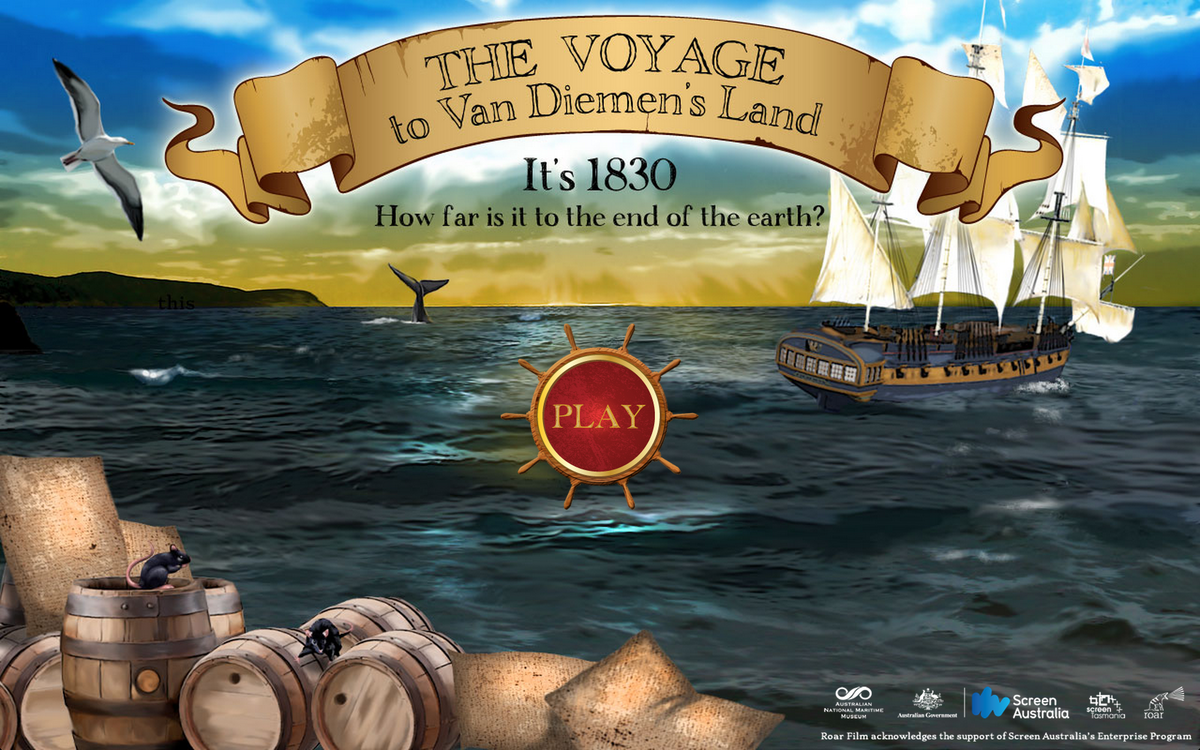 There is a growing interest in many parts of the world in utilising the capacities and affordances of digital games to support learning within the formal arenas of curriculum and school. The use of games-based pedagogies via online and mobile Internet-based technologies is seen as providing much potential for innovative, effective and accessible contemporary teaching and learning (Beavis, 2012; Beavis, et al, 2014), as well as a new way for museums to engage with their educational audiences (Kelly, 2013). The museum in partnership with roar film (Tasmania), Screen Australia and Screen Tasmania have developed an educational game, The Voyage, based on the nineteenth century convict experience. The Voyage takes the user on a journey from London to Van Diemen’s Land (now known as Tasmania) where players, as the ship’s Surgeon Superintendent, are rewarded for the number of healthy convicts they deliver to the fledging British colony. The game is based on detailed historical data, utilising documented ship paths, convict and medical records and diaries.
As part of the development of the game, the museum has partnered with academics Professor Catherine Beavis and Dr Leonie Rowan, Griffith University, and Dr Joanne O’Mara, Deakin University, to undertake research into games and museum educational pedagogy. I am presenting the first (of many) papers reporting on this work at the Museums and the Web Asia 2014 conference in October.
A pdf copy of the paper can be downloaded here: Gamifying the museum BEAVIS et al 2014 PAPER
Watch this space for more!
References
- Beavis, C. (2012). Critical perspectives, enabling classrooms and digital games: challenges for teachers an researchers working with games-based learning. In Biswas, G., et al. (Eds) Proceedings of the 20th International Conference on Computers in Education. Singapore: Asia-Pacific Society of Computers in Education.
- Beavis, C., Muspratt, S. and Thompson, R. (2014) ‘Computer games can get your brain working’: student experience and perception of digital games in the classroom. Learning Media and Technology.
- Kelly, L. (2013). The Connected Museum in the World of Social Media. In Drotner, K. and Schroder, K. (Eds) Museum Communication and Social Media: The connected museum (pp. 54-71). Routledge: London.