
In late 2013 a new display will open to the public in the museum’s USA Gallery. This World War 2 story remembers the service of over 3,000 Australian civilians employed by the US Army Small Ships Section between May 1942 and January 1947. Many objects and photographs selected for display have been borrowed from individuals or from the families of those who served with the US Small Ships. The US Army Small Ships Association Inc has been instrumental in helping museum staff with the development of this project.
So why are we telling this story?
It is a fascinating and little known part of the Allied war effort in the Pacific. The US Army Small Ships Section played a crucial role in transporting supplies to Allied troops fighting in the Philippines, Papua New Guinea and other South-West Pacific campaigns. Sailing under the American flag, they carried food, water, ammunition, mail and building and medical supplies. They collected the wounded and repatriated the dead.
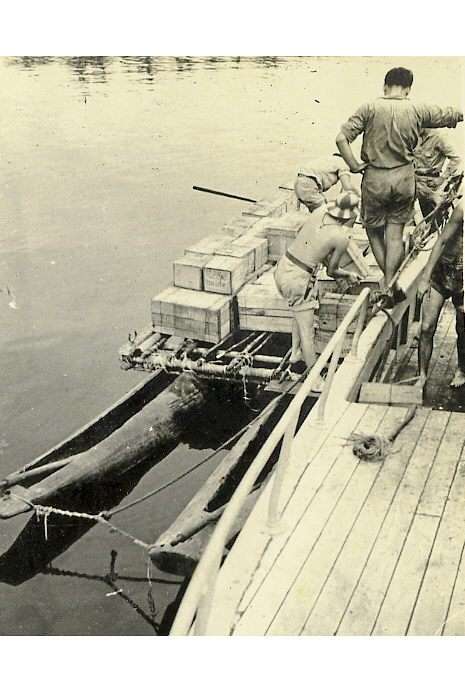
Unloading supplies from a US Army small ship, Papua New Guinea, about 1943.
Photographer Neil Sandery
Nothing about this fleet was conventional. The vessels were largely skippered and crewed by Australian civilians considered too old or too young or medically unfit to join the Australian Armed Services. Some were as young as 15 while others were 70 years old. A small group of US Army officers led by Captain Sheridan Fahnestock co-ordinated the charter and requisitioning of vessels from Tasmania, mainland Australia and New Zealand. It was essential for these ‘small ships’ to have shallow draft so they could navigate the uncharted coastal waters of Papua New Guinea where larger vessels could not safely go. This ‘raggle taggle’ fleet included fishing trawlers, sailing craft, tugs, private launches, speed boats, ferries, landing craft and some larger ships such as freighters. This fleet grew to over 3,000 by war’s end due to an ambitious vessel building program.
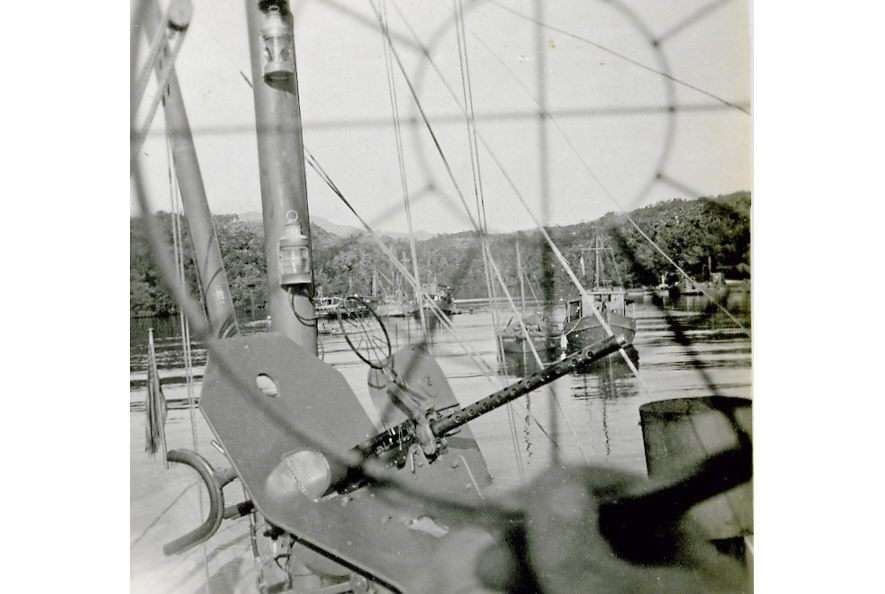
US Army Small Ships in Papua New Guinea about 1943. Photographer Neil Sandery
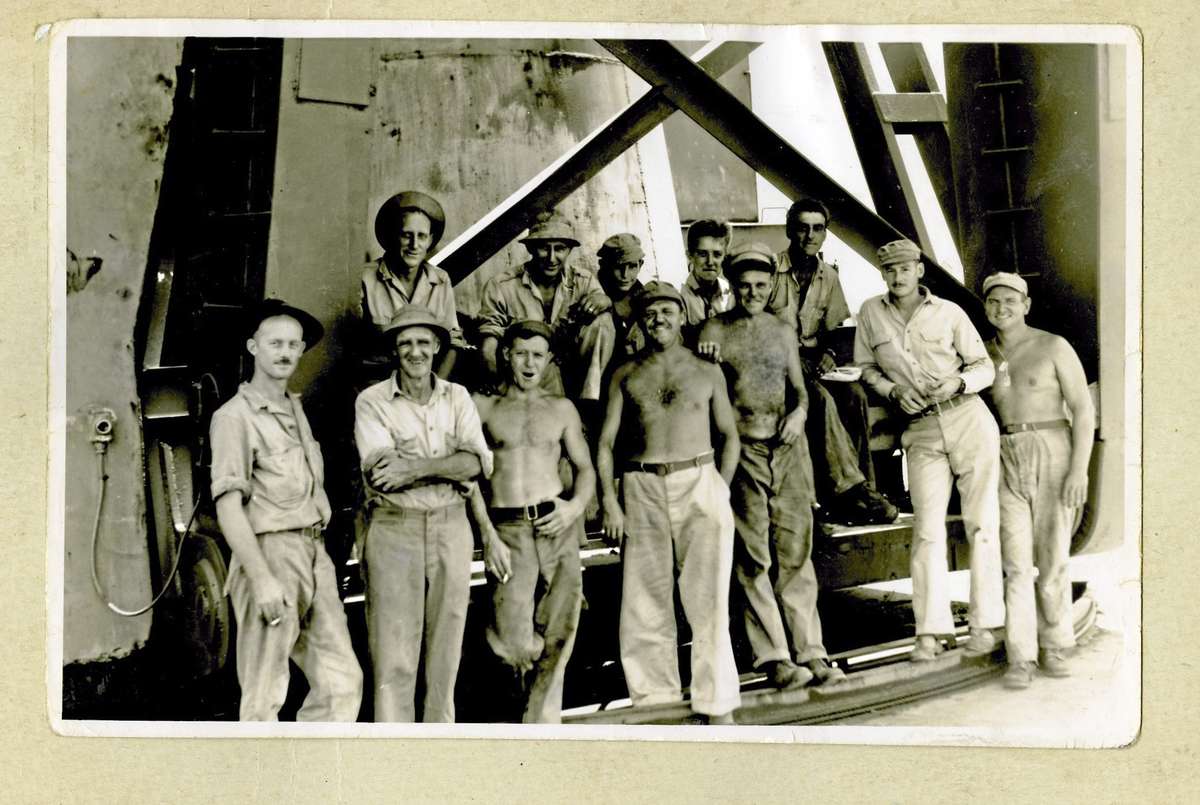
US Army Small Ships personnel in 1943 Neil Sandery, second from right. Photographer Robert Bruce Irving
While researching the story of the US Small Ships, I was struck by a series of photographs taken by Neil Sandery (1917- 1946) who joined the US Small Ships in 1942. He was a keen amateur photographer and his evocative images provide an insight into the hazards and hardships of daily life as part of the US Army Small Ships service. Sandery takes the viewer on board the vessels he skippered as well as the places he visited. His is but one of many compelling stories to emerge from researching the history of the US Small Ships service during World War 2.
Sandery was the skipper of the Timoshenko, one of two trawlers involved in the advance landing of US Army troops at Pongai, Papua New Guinea, in October 1942. Timoshenko and King John were mistaken for Japanese vessels and attacked by an American bomber. Two men were killed and 18 wounded in the attack.
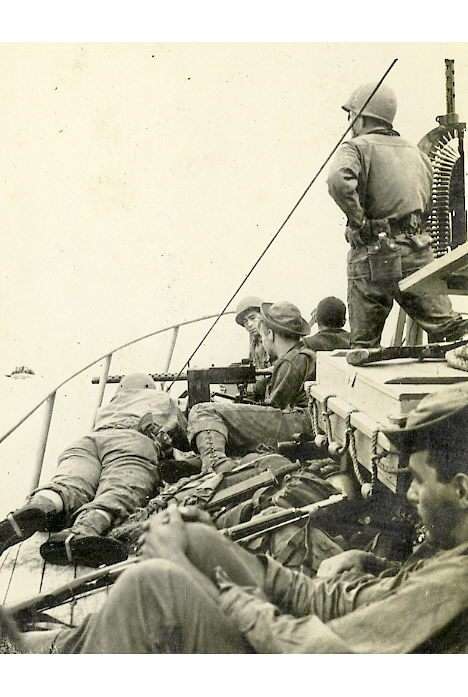
US troops on board the trawler Timoshenko enroute to Pongai 18 October 1942. Photographer Neil Sandery
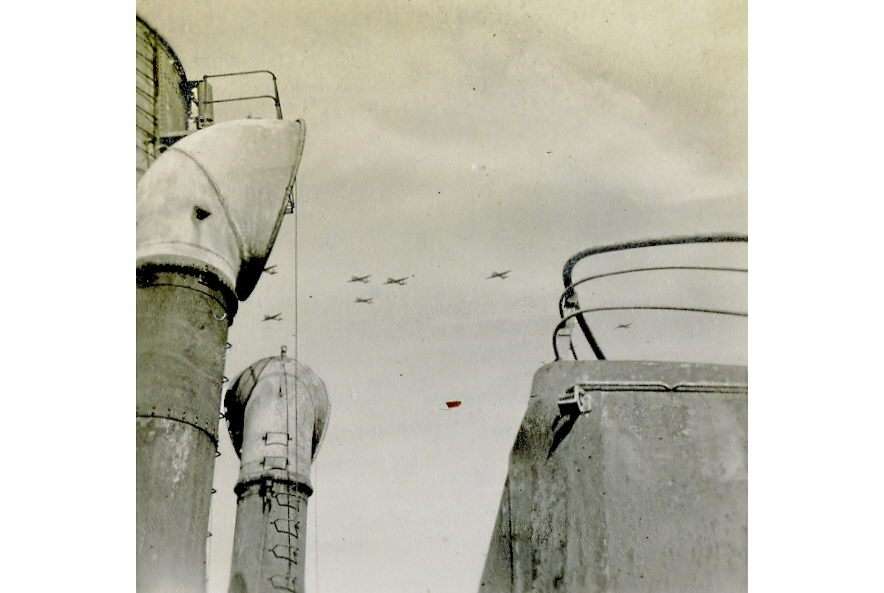
Unidentified bombers overhead, Papua New Guinea, about 1943.
Photographer Neil Sandery
This exhibition would not be possible without the generosity and assistance of individuals who served with the US Small Ships Service, the US Army Small Ships Association Inc and its President Ernest A Flint, and the efforts of others who have previously researched and written about this fascinating subject.
Penny Cuthbert
Curator
Suggested Reading
Lunney B and Lunney R Forgotten Fleet 2, Forfleet Publishing, 2004
Reday L The Raggle Taggle Fleet , US Army Small Ships Association